
Develop the analytical skills to assess reliability, characterize uncertainty, and quantify risk in space systems and missions. Apply component and system reliability methods, Bayesian data analysis, physics-of-failure approaches, and probabilistic risk assessment.
Online · Live sessions
- Live lectures via Zoom
- Recorded sessions and downloadable course notes
- Optional homework exercises
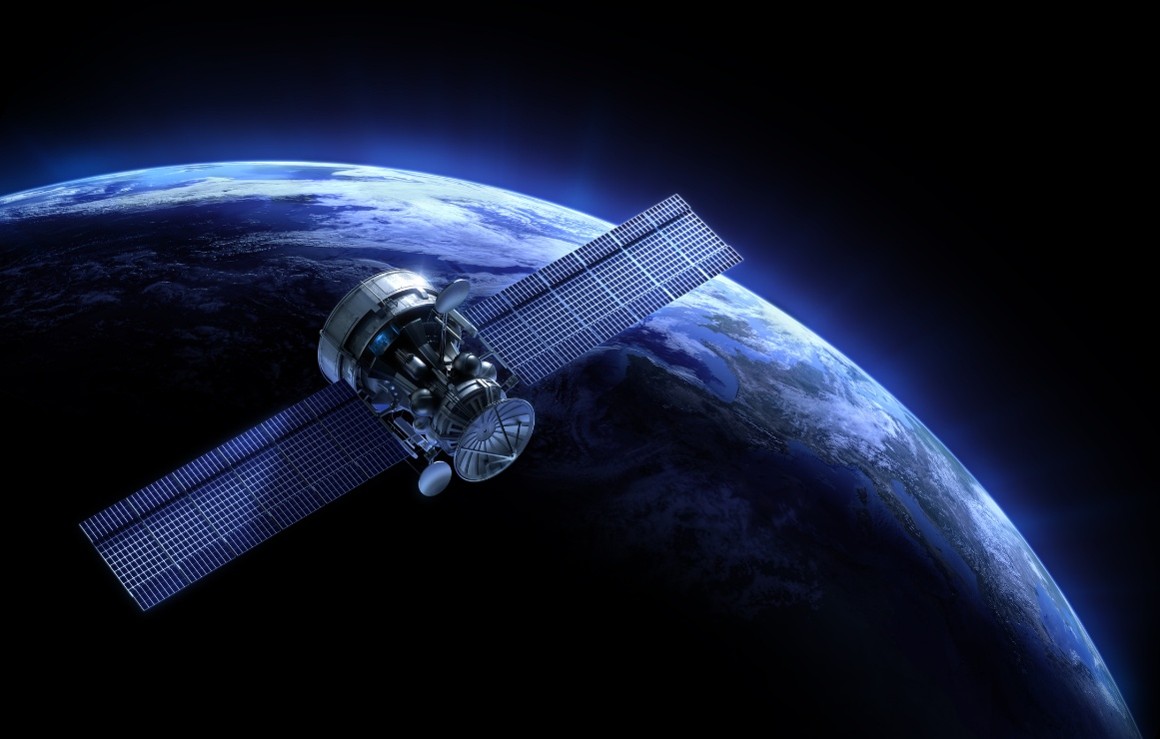

In this new essential course, offered in partnership with the American Institute of Aeronautics and Astronautics (AIAA), develop the analytical skills to assess reliability, characterize uncertainty, and quantify risk in complex space systems and missions.
Reliability is critical to the success of complex space systems, where failures can have significant mission consequences and opportunities for repair may be limited. This course introduces the principles, methods, and analytical tools used to evaluate reliability and risk in space systems and missions.
Participants will develop a practical foundation in component and system reliability analysis, including probability and statistical methods, life data analysis, Failure Mode and Effects Analysis (FMEA), reliability block diagrams, fault tree analysis, and event tree analysis. The course also addresses Bayesian data analysis, quantitative reliability modeling, uncertainty propagation, physics-of-failure approaches, and probabilistic risk assessment.
These methods and techniques are brought together to examine reliability and risk at the component, system, and mission levels, including hardware, software, and human reliability and their interdependencies.
Course fees
All prices in USD, per learner
Individual enrollment
AIAA members: email EngineeringExecEd@jhu.edu for help obtaining your member discount code before registering.
Group enrollment
For enrollment questions or Bright Horizons voucher payments, email EPE at EngineeringExecEd@jhu.edu. Include your voucher if using it for payment.
Live session schedule
March 3–April 14, 2027 · Wednesdays, 1–3 p.m. Eastern Time
Six live sessions: March 3, 10, 17 and 31; April 7 and 14. No class on March 24 during spring break.
12 classroom hours; approximately 24 total hours. All sessions will be recorded and available for replay; course notes will be available for download.
Skills and learning outcomes
By the end of the course, participants will have a structured framework for selecting and applying appropriate reliability and risk-analysis methods to complex space systems.
- Construct and interpret various reliability models of ground, launch, and space systems.
- Identify potential failures and weak points in space system designs.
- Determine failure model parameters from failure and anomaly data.
- Augment failure data with expert opinion using Bayesian data analysis techniques.
- Quantify the probability of failure for engineered systems.
- Communicate uncertainties of analysis in a quantifiable and traceable manner.
What this course covers
Module 1
Introduction and Background
- What is reliability engineering? Principles and terminology
- History - Evolution of reliability engineering and its application to space systems
- Sources and mechanisms of space-system failure
Module 2
Data Analysis for Components
- Statistics and probability distributions
- Determine distribution parameters and quantify associated uncertainties
- Life data analysis to evaluate failures over time
- Bayesian approaches to reliability data analysis allowing for the inclusion of multiple forms of information to augment failure data
Module 3
System Analysis (Qualitative)
- Failure Modes and Effects Analysis (FMEA)
- Boolean Logic
- Reliability Block Diagrams (RBDs)
- Fault Tree Analysis (FTA)
- Event Tree Analysis (ETA)
- Selecting an appropriate modeling approach
Module 4
System Analysis (Quantitative)
- Quantification for reliability models to provide insight to system level risk drivers
- Propagation of uncertainty in data, parameters, and knowledge through the models
- Enhancing system models to dependent failures, common cause failure, state models, and pre-cursor analysis
Module 5
Physics of Failure
- Enhancing traditional reliability analysis
- Discuss the concept of calculating reliability using physics models of failure mechanisms
- Explain Stress-Strength, Damage-Endurance, Performance-Requirement Interference models. Given distributions of each calculate the reliability with each relationship
- Mechanisms of fatigue, Creep, Wear for mechanical system as well as electromigration and dielectric breakdown for electronic systems
Module 6
Probabilistic Risk Assessment (PRA)
- Quantifying risk of engineered systems
- Explain the uses for PRA and the differences with traditional reliability analysis
- Explain the elements that make up a PRA
- Develop a PRA model for a system
- Communicate PRA results in the context of uncertainty derived from the model
Optional homework exercises are provided to foster a practical understanding of class material. Real world examples and models will demonstrate the techniques and methods shown with a view toward pulling insights from the analyses.
Who is this course for?
Designed for engineers, analysts, technical managers, and other aerospace professionals who need to understand, conduct, interpret, or use reliability and risk analyses for space systems and missions.
Meet your instructor

Clayton Smith, PhD
Johns Hopkins University – Applied Physics Lab
Over 40 years of experience analyzing systems from risk, reliability, and safety perspectives. These systems included: NASA and DoD spaceflight missions, payloads, missile systems, submarine systems, ground communication systems, air traffic control systems, large integrated computer systems, and petro-chemical processing plants. Dr. Smith leads the Reliability and Probabilistic Risk group within the Space Exploration Sector of the Johns Hopkins University - Applied Physics Lab. He created and managed NASA’s International Space Station Program Probabilistic Risk Assessment specifically geared toward quantifying the safety risk during operations. Conducted many safety and reliability analyses that include: Hazard Analyses (Hardware & Operations), Fault Tree Analysis, Availability modeling (Hardware & Software), Failure Modes and Effects Analysis, RF link availability due to rain attenuation, requirement compliance, trade studies for alternate designs, spares provisioning validation, and failure data trending.
Education
- PhD, Reliability Engineering, University of Maryland, College Park, Maryland. 2011
- MS, Technical Management, University of Maryland University College, College Park, MD. 1994.
- BS, Aerospace Engineering, University of Maryland, College Park, MD. 1986.
Completion recognition
Complete the course to earn a Johns Hopkins University badge of completion and receive completion recognition from AIAA.
Course delivery and materials
The course lectures will be delivered via Zoom. Access to the Johns Hopkins learning platform will be provided to registrants near to the course start date.
- All recorded classes will be available on-demand within 1-2 business days of the lecture. Once available, you can stream the replay video anytime, 24/7.
- All slides will be available for download after each lecture. No part of these materials may be reproduced, distributed, or transmitted, unless for course participants. All rights reserved.
- Between lectures during the course, the instructor will be available via email for technical questions and comments.
Live session recording notice
Live virtual sessions are recorded and may be repurposed as course materials at the discretion of Johns Hopkins University (JHU) and viewed by future learners. Recordings may include your name, image, voice, questions, comments, and other participation. Although JHU will make reasonable efforts to remove or minimize personally identifiable information during editing, some identifying information and participation may remain in the recordings.
Have questions about this course?
Request additional information about course content, delivery, and enrollment.